BLUE TECH RADARTechnologies that are transforming the sea.
MODX 70: inflatable, automated wings show how technology is reinventing the sail
The French catamaran combines two Aeroforce wings, electric propulsion, solar power and hydrogeneration in an architecture that points to new paths for low-carbon sailing.
August 2026
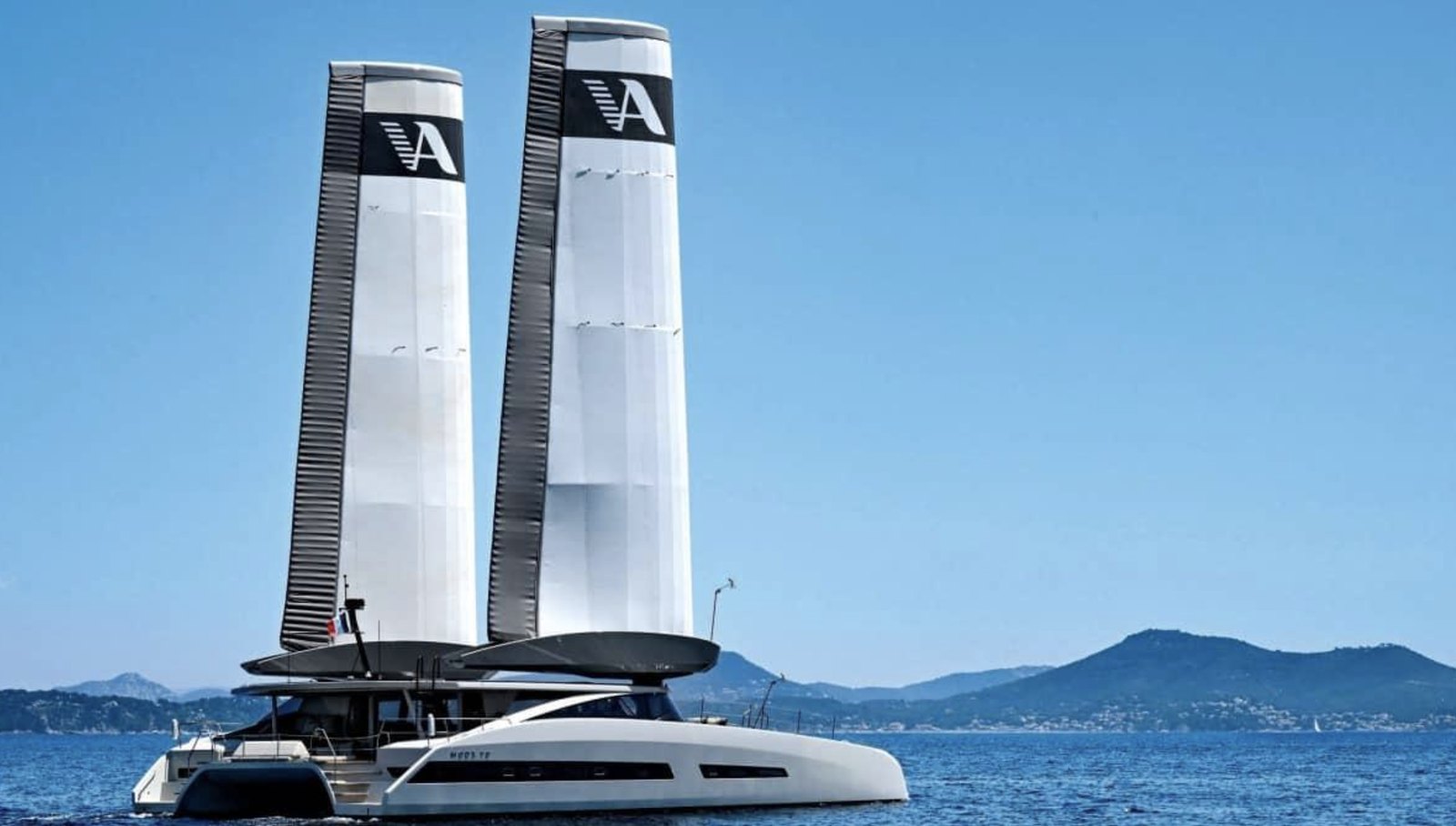
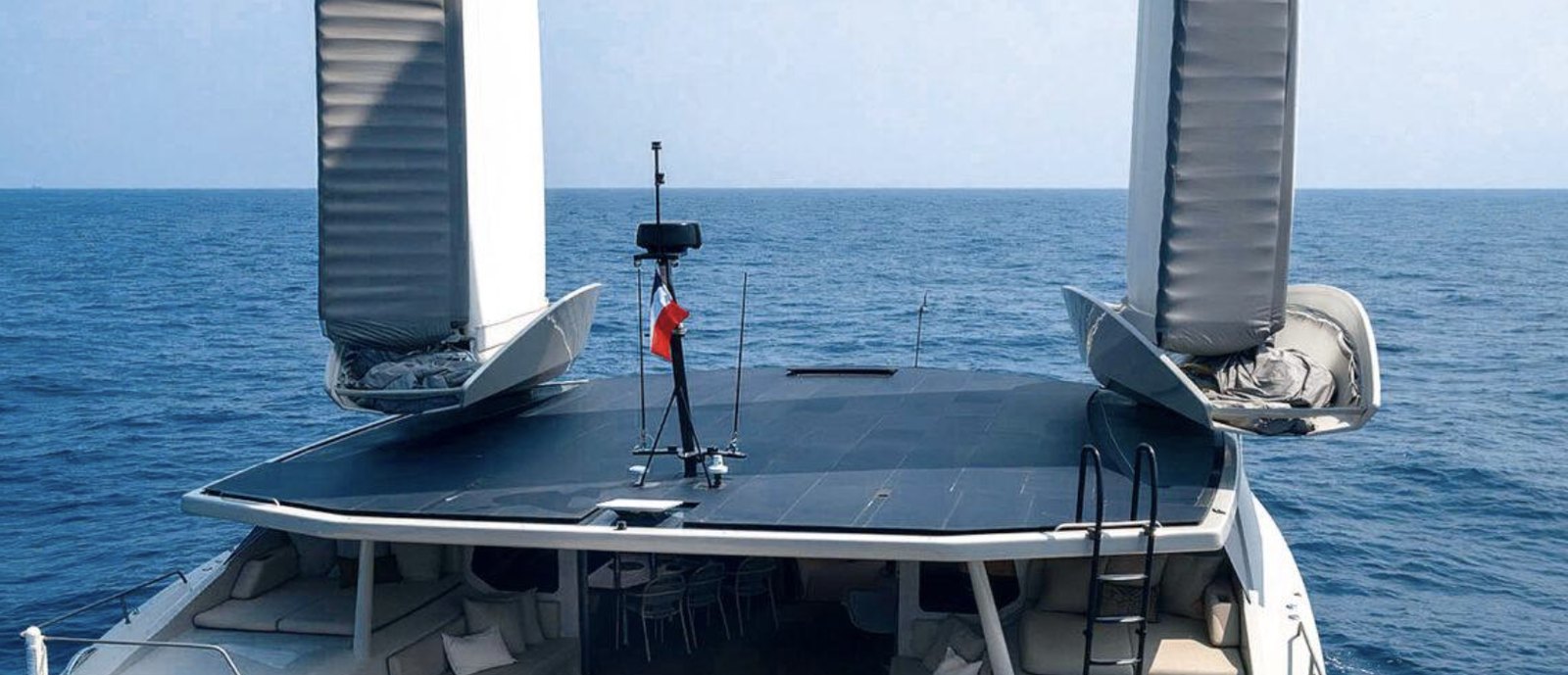
A vessel sailing with two huge vertical structures in place of traditional sails has been drawing attention in the international nautical sector. At first glance they may look like rigid sails. The technology, however, is more sophisticated: these are inflatable, retractable and automated aerodynamic wings.
The Aeroforce system is installed on the MODX 70, a 70-foot French catamaran developed by MODX Catamarans and Océan Développement, designed to integrate different renewable energy sources.
More than a new sail design, the project shows how concepts from aerodynamics, automation, electrification and energy management are starting to converge inside a single vessel.
From traditional sail to an aerodynamic profile
Each of the two Aeroforce wings has 125 m² of surface, totalling 250 m². The fundamental difference lies in the way the wind is harnessed.
According to the developer, the inflatable structure creates an aerodynamic profile based on the so-called NACA profiles, widely used in aerodynamic studies and in wing development.
Patented technical fabrics allow the envelope to stay sealed and rigid enough even when working at low pressure, keeping the shape needed to produce the aerodynamic force.
The system also incorporates a controllable flap, which makes it possible to change the aerodynamic behaviour of the wing according to wind conditions. In practice, concepts associated with aeronautical engineering start working directly on the propulsion of a vessel.
The wing disappears when it is not needed
One of the most interesting solutions is in the mast. Each wing uses a motorised telescopic carbon fibre mast. During deployment, the mast rises while the structure is inflated.
When it is no longer in use, the reverse happens: the wing is deflated and the mast can be retracted into the vessel.
This capability seeks to solve one of the challenges of large rigid wings, which is how to reduce their exposure when they are not in use or in certain weather conditions. In Aeroforce, the answer was to combine the aerodynamic characteristics of a wing with the possibility of retracting the system.
Automation changes the way you sail
Raising and lowering the mast, as well as controlling the wing and the flap while sailing, are mechanised and automated.
MODX itself describes the boat as having a centralised, automated and connected panel that manages the systems. This reduces dependence on a series of physical operations normally associated with trimming large sail areas.
It does not mean taking the sailor out of the equation. It means adding a new technological layer to sailing: sensors, actuators, computers and control systems start working alongside human experience.
The wind also helps to produce electricity
The MODX 70 becomes even more interesting when the sail system is seen as part of a whole. Besides the two wings, the catamaran has 70 m² of solar panels, reaching a maximum output of 15 kWp, a 250 kWh battery bank and electric propulsion.
There is also a hydrogeneration system. While sailing, the movement of the vessel can be used to generate electricity through the propellers. MODX reports hydrogeneration capacity of between 3 and 10 kW, depending on boat speed.
This creates a logic of energy integration: the wind generates movement, the movement can generate electricity, the sun also produces energy, the batteries store that energy and the electric motors complete the propulsion system. It is an architecture that seeks to drastically reduce dependence on fossil fuels.
A laboratory for the boating of the future
The MODX 70 measures 21.33 metres in length by 10 metres in beam and its naval architecture is by VPLP Design. According to the builder, the first MODX 70 fitted with Aeroforce wings entered the water in 2024. In 2025 the vessel began to be presented internationally with the system already operational.
The project should not be seen only as a new luxury catamaran. It also works as a floating laboratory for technologies that may gain growing importance in the maritime industry.
Electrification is already advancing in different segments. Solar generation is increasingly present on board. Automation systems make vessels smarter. And different forms of wind-assisted propulsion have returned to the centre of the debate on energy efficiency and decarbonisation.
What the MODX 70 does is place several of those technologies inside a single architecture.
The future may lie in the wind again
For centuries, wind was the main source of energy for crossing oceans. It then lost ground to mechanical propulsion.
Now, faced with the need to cut energy consumption and emissions, it returns to the centre of naval engineering, but accompanied by advanced materials, aerodynamics, sensors, computers and automation.
Perhaps this is one of the most interesting features of the current technological transformation of the Ocean Economy. Innovating does not always mean abandoning an old technology. Sometimes it means reinventing it completely.
Blue Tech | Technical sheet
Vessel: MODX 70. Length: 21.33 m, 70 feet. Beam: 10 m. Sail system: Aeroforce. Wings: 2 x 125 m², inflatable, retractable and automated. Solar power: 70 m², up to 15 kWp. Batteries: 250 kWh. Hydrogeneration: 3 to 10 kW depending on speed. Propulsion: electric and wind. Naval architecture: VPLP Design. Development: MODX Catamarans and Océan Développement. Origin: France.
Blue Nautical Hub Brasil report, with information from MODX Catamarans. Images: © Océan Développement / Martin Viezzer.