BLUE TECH RADARTechnologies that are transforming the sea.
Marine Telematics brings Brazilian engineering to the electronic controls of vessels
The company from Santa Catarina develops and manufactures in Brazil control stations, modules, telemetry and electronic integration systems for different types of vessels. Present at Blue Nautical Hub Brasil 2026, Marine Telematics showed how national technology can occupy strategic positions in the new ocean industry.
August 2026
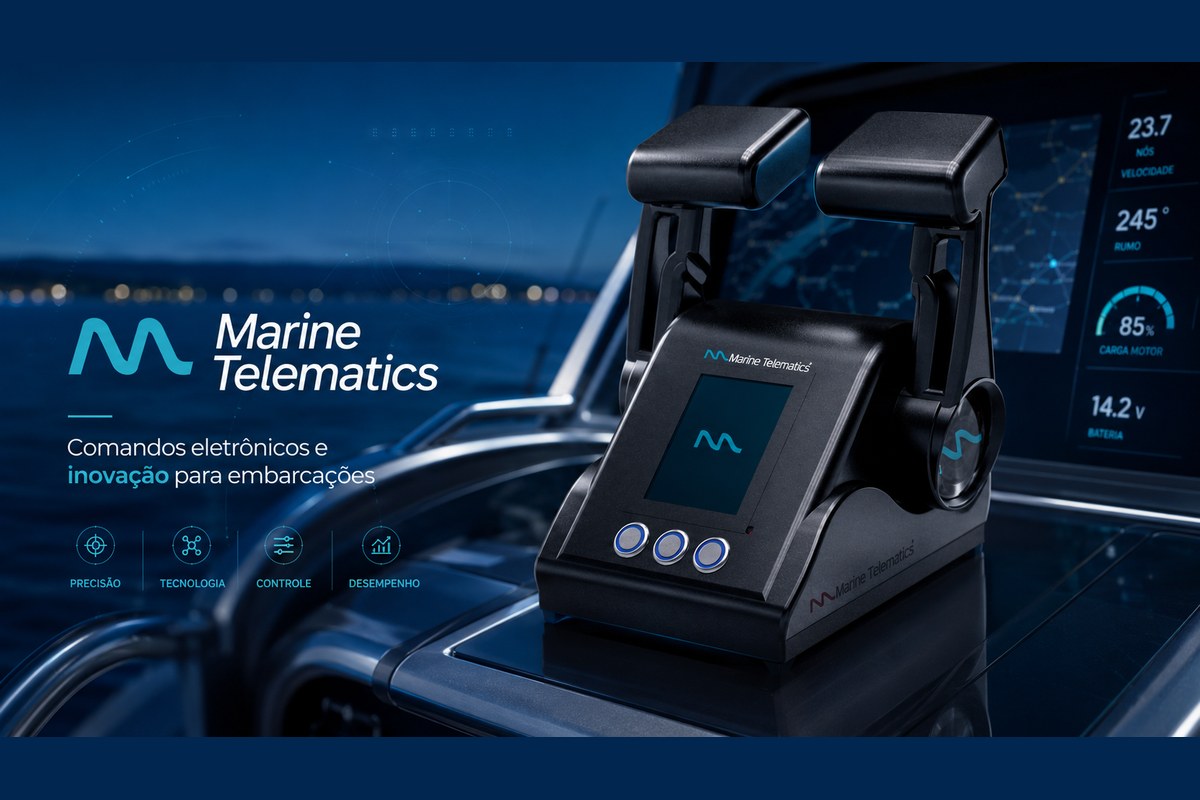
When the skipper moves a lever to accelerate, slow down or engage the gearbox of a modern vessel, there is an electronic architecture working behind the scenes to turn that movement into a precise response from the propulsion system.
It is exactly at that point of the vessel that Brazil’s Marine Telematics operates.
Based in Santa Catarina, the company is dedicated to developing and manufacturing electronic controls for vessels, working with embedded engineering, control modules, control stations, integration with engine ECUs, telemetry and its own communication network.
More than manufacturing a control lever, the proposal lies in creating an electronic architecture able to connect control, engine and operational information inside the vessel.
Control is no longer only mechanical
For decades, most vessels used predominantly mechanical systems to transmit the skipper’s actions to engines and gearboxes. The evolution of marine electronics changed that picture.
In Marine Telematics systems, the control stations work integrated with the electronic modules and the ECU, allowing throttle and shift to be controlled through digital communication. The company also uses its own network, called MTNet, for communication between the different components of the system.
The result is an architecture in which the control becomes part of the vessel’s electronic network. And it is exactly this integration that is becoming increasingly important in the contemporary nautical industry.
CM300HD: two engines under electronic control
Among the systems developed by the company is the CM300HD, a station intended for the simultaneous control of two engines.
The configuration uses two levers and allows, according to the manufacturer, independent or synchronised operation of the engines. Communication happens through a CAN-bus network, with integration to the CM03 ECU and the possibility of communicating with telemetry through the CM06W module where applicable.
The system controls both throttle and gearboxes and was developed with a plug and play installation concept.
It is a good example of how what the user sees on the console is only the interface of a much larger technological structure hidden inside the vessel.
CM400PRO widens the control interface
For twin-engine applications, Marine Telematics also developed the CM400PRO. The station uses CAN communication and controls the CM03 ECU, keeping functions similar to the CM300HD but with a larger display and a focus on more advanced applications.
Among the functions listed by the manufacturer are throttle control, gearboxes, multi-engine operation and integration with the rest of the electronic system.
The development shows another important trend: controls increasingly concentrate not only mechanical actions, but also interfaces, information and data from the vessel’s operation.
Side Mount or Top Mount: different projects need different controls
Not all vessels have the same console configuration. That is why the company also works with alternatives for different types of installation.
The CM250-SM is a side-mount station intended for outboard engine control. It uses the CM02 actuator to turn originally mechanical systems into electronic control and works with CAN communication.
The CM250-TM uses top-mount installation, positioned on flat console surfaces. It was also developed for outboard engines and uses the CM02 actuator in mechanical applications.
These different configurations show something fundamental in nautical engineering: embedded technology needs to adapt to the vessel’s design, not simply be added to it.
Telemetry becomes part of the control
But perhaps one of the most interesting areas lies beyond simple propulsion control. Marine Telematics integrates nautical telemetry into the electronic control system itself.
The architecture allows communication between control stations, engine ECUs, shift relays and driving analysis systems. According to the company, telemetry is built into the electronic architecture, avoiding the need for external modules added after installation.
This brings together two universes that were separated for a long time: commanding the vessel and understanding how it is being operated. And data starts to gain importance precisely there.
Technology for commercial vessels too
The company’s work is not restricted to leisure boats. Marine Telematics says it develops applications for motorboats, sailing yachts, yachts and superyachts, but also for workboats, patrol craft, ferries and maritime transport.
In the commercial area, the company works with integration between propulsion control and on-board telemetry, allowing operational information to be taken to fleet management systems.
This crossover between hardware, software, electronic control, communication and data is one of the most important frontiers of the maritime sector’s digital transformation.
Research, development and manufacturing in Brazil
Another element that places Marine Telematics within Blue Tech Radar is its technological origin. The company states that it develops its own hardware in-house and manufactures in Brazil, controlling stages from development to final assembly of the systems.
This is especially relevant when we look at the Ocean Economy supply chain. The greater Brazil’s capacity to develop electronics, components, automation systems and embedded technologies, the greater the possibility of generating knowledge, specialised suppliers and added value within the country itself.
The boat stops being seen only as a final product. Around it there is a huge industry made up of thousands of components and different technological specialities.
Marine Telematics was already part of Blue Nautical Hub Brasil
There is also a direct link between this story and Blue Nautical Hub Brasil itself.
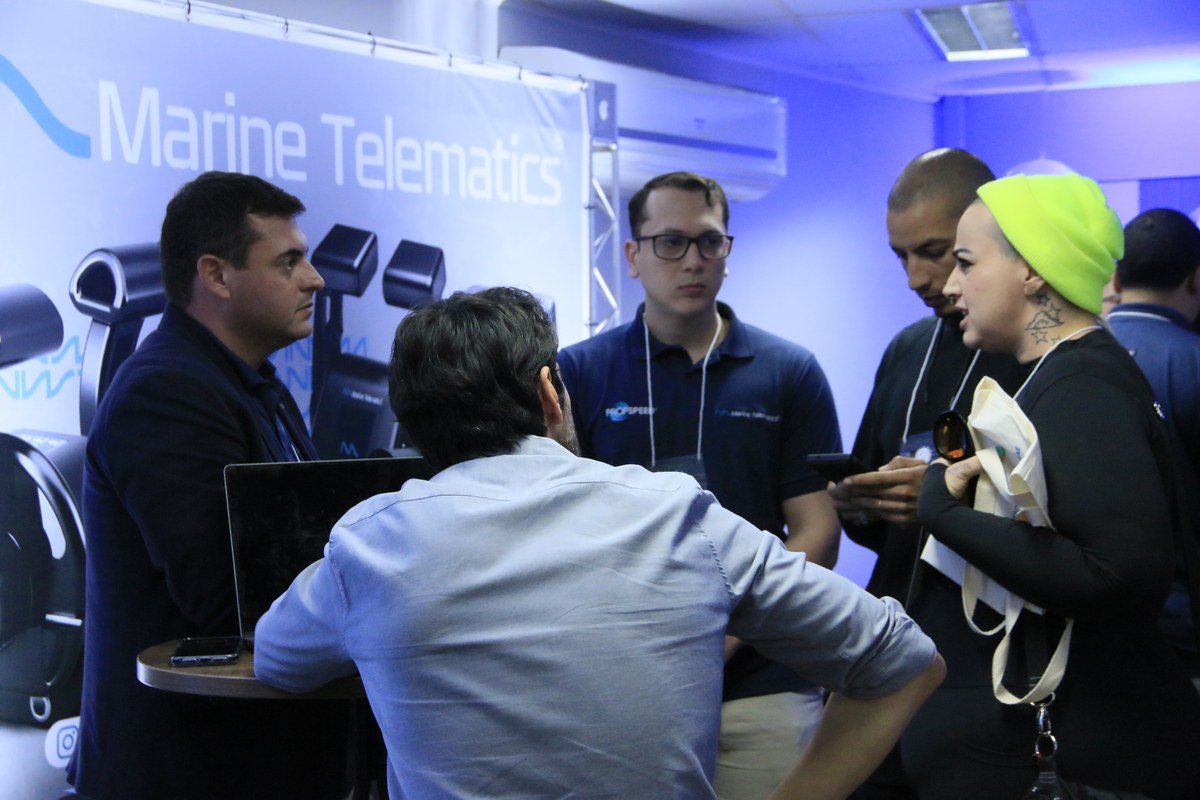
Marine Telematics was present at the 2026 edition, held between 26 April and 1 May in Santa Catarina, joining the ecosystem of companies and technologies gathered by the HUB and presenting its solutions and innovations to the sector. The company was also one of the official sponsors of that edition, alongside Schaefer Yachts.
Blue Nautical Hub Brasil 2026 gathered around 70 companies at the B2B meeting, held 171 meetings in six hours and recorded more than BRL 20 million in business generated so far, according to the event’s official report.
The presence of Marine Telematics materialised one of the project’s proposals: bringing those who develop technology closer to those who build boats, buy equipment, specify solutions and make decisions within the supply chain.
From HUB participant to an example of what we want to widen
The story also helps explain the next step. In the 2027 edition, Blue Nautical Hub Brasil widens its proposal as a B2B professional fair of technology, products, components and services for the Ocean Economy, scheduled for 26 to 30 April, in Santa Catarina.
Companies like Marine Telematics represent exactly the industry profile this environment intends to highlight. Not only large final products, but what exists inside them: marine electronics, controls, sensors, modules, software, telemetry, automation, connectivity and engineering.
It is in this universe that a growing share of nautical innovation happens.
The technology hidden inside the boat
When we look at a vessel under way, we see hull, design, engines and movement. But much of the innovation that allows all this to work is no longer necessarily visible.
It is in the modules, the sensors, the communication networks, the software, the electronics. And even in that apparently simple lever the skipper moves on the console.
Marine Telematics is a Brazilian example of this transformation. A company that was at Blue Nautical Hub Brasil 2026 showing its technology and that helps represent what we want to find more and more at the HUB: companies able to turn knowledge and engineering into solutions for the Ocean Economy.
Blue Nautical Hub Brasil feature, with information from Marine Telematics. Photos: Mundo Mar and Marine Telematics.