BLUE TECH RADARTechnologies that are transforming the sea.
CK-14e marine drone shows how robotics, sensors and autonomy are transforming work on the water
Developed in Italy by Codevintec, this unmanned surface vehicle carries over 40 kg of equipment and integrates technologies for hydrography, oceanography and monitoring. It is the kind of innovation that represents the new technology market of the Ocean Economy.
August 2026
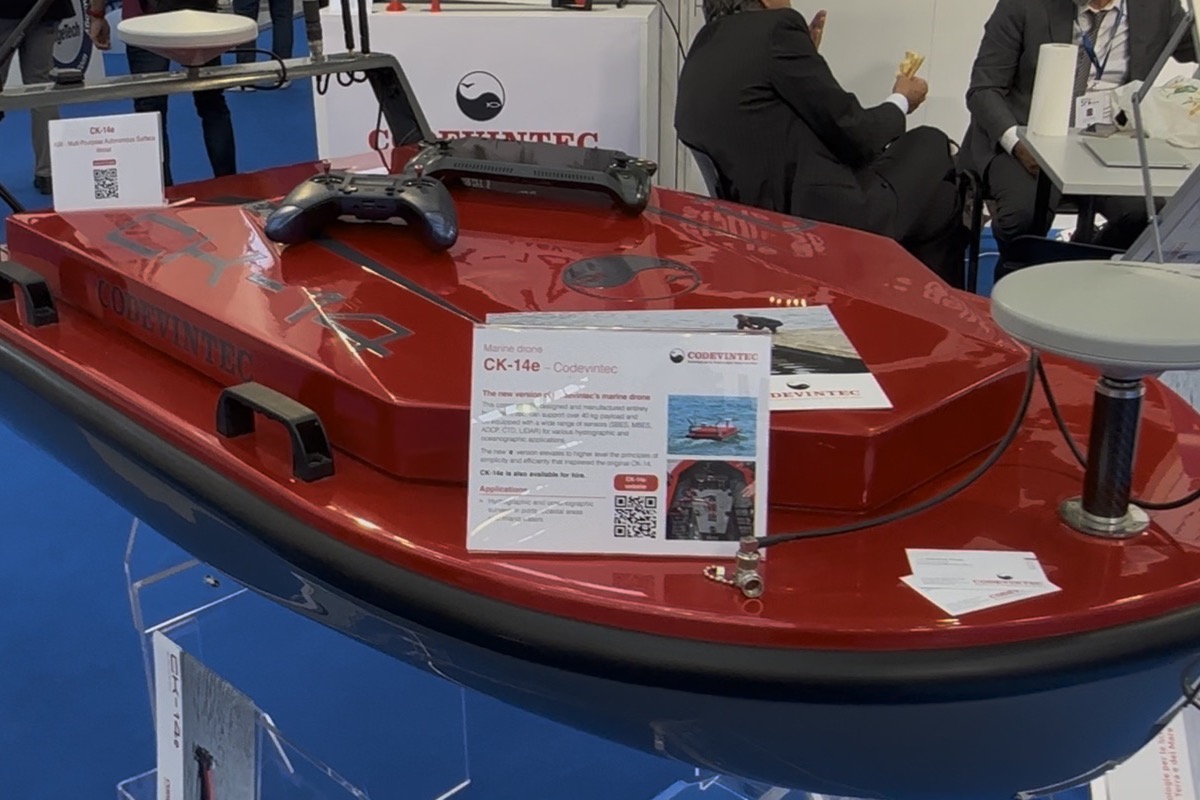
Small in size, yet able to bring together sensors, navigation systems, data processing and autonomous operation in a single platform.
The CK-14e, developed and manufactured by Italy’s Codevintec, is an example of how robotics, connectivity and automation are creating a new generation of equipment for working on the sea, rivers, lakes, ports and coastal environments.
Classified as an ASV, or Autonomous Surface Vehicle, it was developed for hydrographic and oceanographic surveys in places where using a conventional vessel can be more complex, expensive or inefficient. According to the manufacturer, universities, research centres and companies in hydrography, engineering and dredging already use the platform.
A laboratory on the water
The concept stands out above all for its ability to turn a small craft into a configurable technology platform.
The CK-14e is 1.40 m long and 90 cm wide, weighs approximately 22 kg without payload and, even at that size, can carry more than 40 kg of payload.
This means different instruments can be fitted according to the mission. Codevintec lists compatibility with technologies such as SBES and MBES, ADCP, CTD, Side Scan Sonar, LiDAR, GNSS systems, inertial equipment and other third-party sensors, allowing the same vehicle to be configured for different operations.
In practice, this is far more than a small unmanned boat. It is a platform for collecting and producing data about the aquatic environment.
From ports to oceanography
The uses indicated by the manufacturer include hydrographic and oceanographic surveys in ports, coastal areas, rivers, lakes, reservoirs and other places where traditional vessels may face operational limits.
Depending on the sensors fitted, technologies of this kind can be used in bathymetry, current analysis, mapping, environmental monitoring and a range of scientific and engineering activities.
The CK-14e hull is made of carbon fibre and Kevlar, a combination the company uses to achieve structural strength with reduced weight. The new generation also brought changes to the deck, weight distribution, impact protection and the space allocated to equipment.
Up to 12 hours of operation
Endurance is another important feature. Codevintec’s technical documentation indicates operations of up to 12 hours, depending on configuration, with the possibility of extension through additional batteries.
Propulsion uses two independent brushless motors. The standard top speed indicated is approximately 4 knots, with a 3-knot cruise and a high-speed configuration option capable of reaching 6 knots.
But it is perhaps in connectivity that one of the clearest demonstrations of the changes reaching the Ocean Economy can be found.
Remote operation and autonomy
Through the optional Sestante system, developed by Codevintec, the vehicle can operate using RF, long-range Wi-Fi or 4G communication. The system enables functions such as remote piloting, autopilot and management of the on-board computer.
This means the traditional concept of a crew necessarily on board for certain activities is starting to share space with operations centres, remote systems, sensors, data processing and unmanned vehicles.
It is a transformation similar to the one seen in other industrial segments, and one that is now gaining ground in the maritime environment.
The Ocean Economy is also a technology industry
Equipment like the CK-14e helps show the breadth of the new supply chain linked to the sea. This is not only about vessels.
It is about robotics, embedded intelligence, telecommunications, sensors, software, data processing, new materials, batteries, positioning systems, automation and engineering.
And it is precisely this universe that takes a central position at Blue Nautical Hub Brasil 2027.
The edition is scheduled for 26 to 30 April 2027, in Santa Catarina, Brazil, and its main development is a B2B professional trade fair dedicated to technologies, products, components and services for the Ocean Economy.
The project is not a boat show. The aim is to connect manufacturers, suppliers and technology developers with the professionals who buy, specify, integrate and use these solutions in the nautical, naval, fishing, port, defence and other segments linked to the Ocean Economy.
The ten areas already planned for the fair include technology and innovation; electronics, technology and software; maritime defence and security; marinas and infrastructure; sustainability and Blue Economy; engines, propulsion and energy, plus a Startup Arena, a Green-Blue Innovation Hub and a space dedicated to international companies and delegations.
The Hub is looking for technologies that are changing the sector
Surface and underwater drones, artificial intelligence, autonomous systems, new sensors, monitoring equipment, connectivity solutions, software, electrification, new materials and environmental technologies are precisely some of the markets beginning to redefine how we use, study, protect and produce on the sea.
These are the technologies Blue Nautical Hub Brasil wants to bring closer to the Brazilian market.
Brazilian and international companies interested in presenting products, equipment and solutions at the 2027 edition can already pre-register their interest in exhibiting through the official website.
The future of the Ocean Economy will not be only on the water. It will be in the sensors, the data, the automation and the technologies that will let us understand and use the sea in ways we are only beginning to discover.
Blue Nautical Hub Brasil feature. Photos: Mundo Mar.