BLUE TECH RADARTechnologies that are transforming the sea.
Cabotage 4.0: the technology taking cargo off the road and putting it at sea
Artificial intelligence, onboard sensors and port automation attack the one point where coastal shipping used to lose to the truck: predictability. And the efficiency is coming from data, not from new fuel.
August 2026
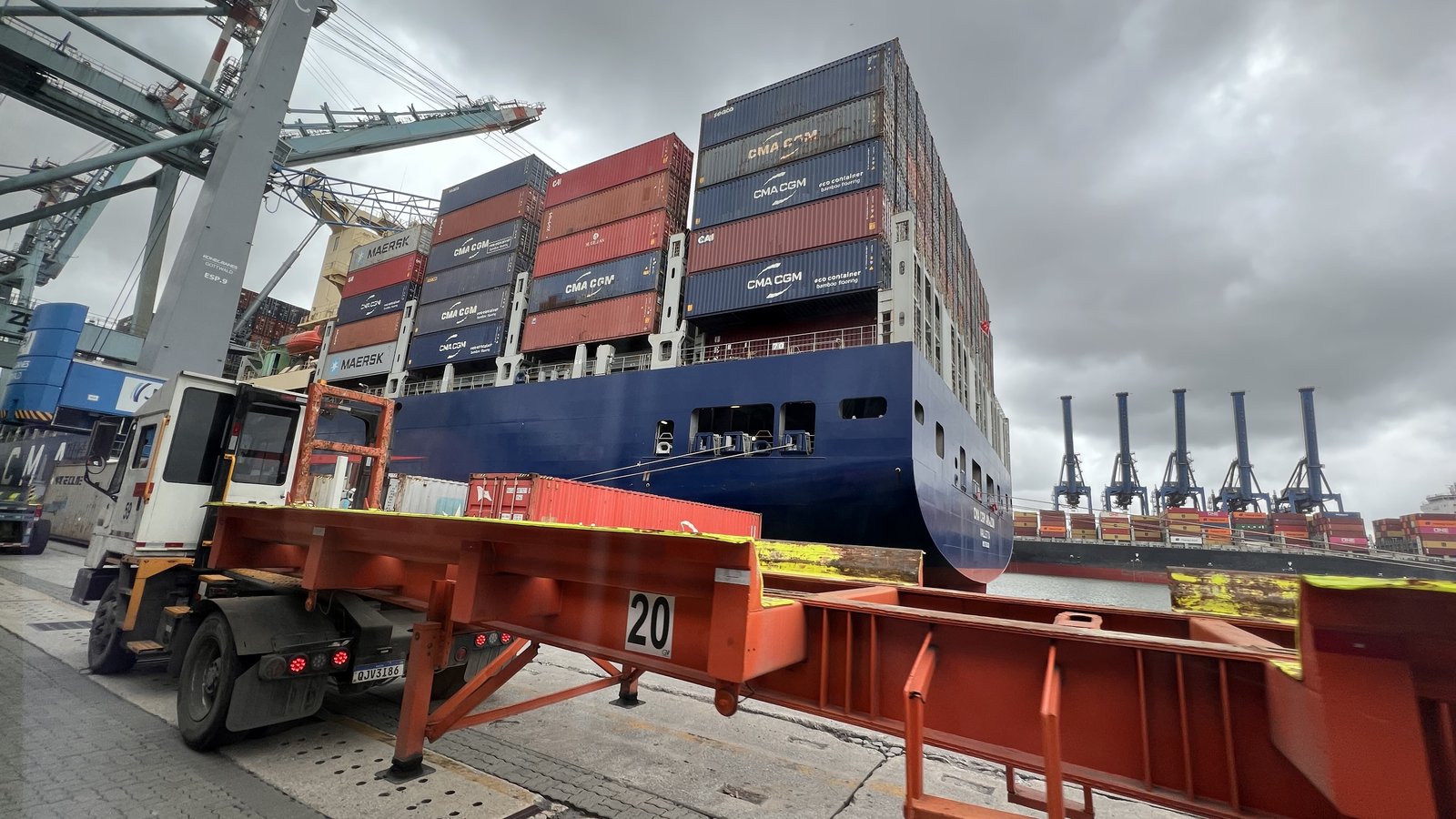
Brazil has more than eight thousand kilometres of coastline and spent decades moving cargo over asphalt. The reasoning is familiar: a truck is flexible, reaches anywhere and leaves whenever the shipper wants.
Coastal shipping wins on cost per tonne, on emissions and on cargo security. According to Ipea research cited by the Brazilian Association of Cabotage Shipowners, maritime transport can be up to five times more efficient in CO₂ emissions than road transport over long distances. And the cargo theft risk that haunts Brazilian highways is practically zero at sea.
Even so, the mode lagged for a long time. The reason was not the ship.
The bottleneck was never the ship
What the road offers and the sea historically did not is predictability.
A truck leaves today. A ship leaves on schedule, and the schedule depends on the berthing window, terminal productivity, tide, weather and the queue at the quay. Nobody managing inventory can work with a date that may shift by three days.
That is exactly the point so-called Cabotage 4.0 attacks. It is not about building a faster ship. It is about knowing, in advance and with confidence, when the ship will berth and when the cargo will leave the gate.
What Cabotage 4.0 actually means
ABAC organises the concept into three pillars, and it is worth understanding what each one solves.
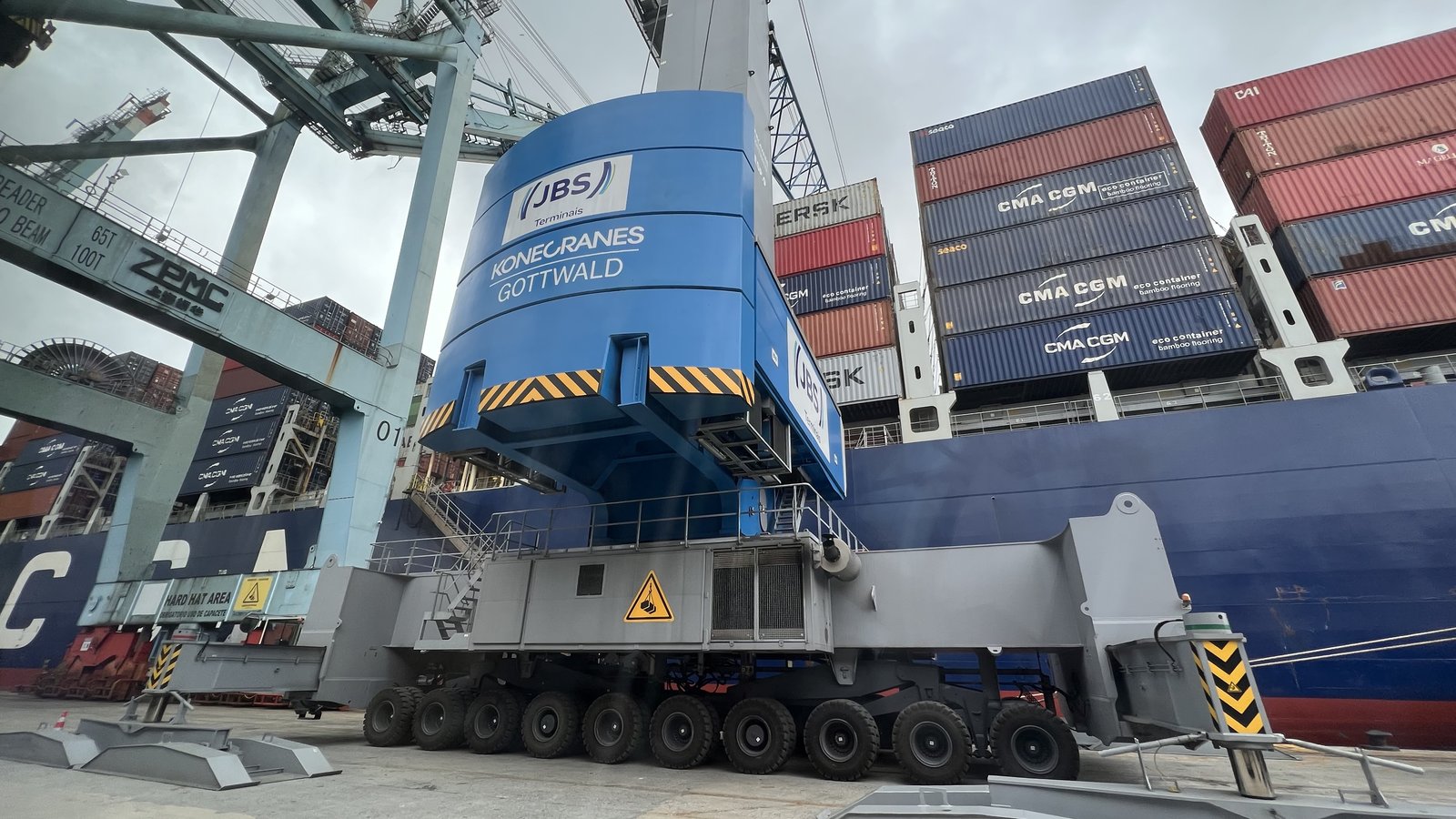
The first is port automation. Automated cranes and electronic entry gates cut the time a ship sits at the quay, which shortens the inventory cycle and lowers berthing cost.
The second is big data with artificial intelligence. Algorithms cross weather, tide, port traffic and operating history to optimise routes and predict berthing windows, suggesting schedule adjustments before congestion happens.
The third is the internet of things. Containers tracked by satellite in real time, with sensors recording shock, door opening, temperature and humidity. For refrigerated or high-value cargo, that stops being a comfort and becomes a contract condition.
Notice what the three have in common: none of them changes the hull. All of them change the information available about the operation.
Efficiency that does not depend on new fuel
A recent Brazilian case illustrates the other half of the story well.
Norsul reported avoiding 13 thousand tonnes of CO₂ between 2023 and 2025, compared with the 2022 base year. The set of measures is revealing, because almost none of it is alternative fuel.
The company applied a silicone-based antifouling coating with electrostatic application, which it says is the first of its kind in Latin America, to cut hull friction. It installed an electronic system from BioRen that emits electromagnetic pulses to prevent marine organisms building up during idle periods.
It also adopted Propeller Boss Cap Fins, small fins on the propeller hub that reduce the vortex and deliver up to 5% fuel savings, with a proportional cut in emissions. It put solar panels on anchored barges to replace diesel generators, deployed IoT monitoring software and is studying shore power supply for berthed vessels.
Under ISO 19030 and International Towing Tank Conference parameters, antifouling technologies can reach 35% emission reduction and 20% reduction in the power needed to sail.
The company’s fleet executive manager, João Bottoni, summed up the point by saying energy efficiency does not depend only on alternative fuels, but on data and technology applied to daily operations.
That sentence deserves attention. While the sector debates methanol, ammonia and LNG for ten years from now, there are double-digit gains available today, with a clean hull, a well-sorted propeller and a calculated route.
The port is half the problem
A common mistake when discussing marine technology is to look only at the ship.
Much of the cost and time of a cabotage operation happens with the ship standing still. Every extra hour at the quay is generator fuel, crew, port fees and, above all, delay at the next call.
That is why terminal productivity weighs so heavily. A faster crane, a gate without a queue, digital paperwork and truck scheduling are worth as much to the shipper as a more efficient ship.
This is where cabotage stops being a shipowner’s subject and becomes a whole-chain subject: terminal, logistics operator, equipment supplier, systems integrator and shipping industry sit at the same table, or the gain does not materialise.
The numbers for the mode in Brazil
Recent growth helps explain why the subject became urgent.
According to ANTAQ, the Brazilian waterway sector moved 1.4 billion tonnes in 2025, up 6.1%. Cabotage accounted for 303.7 million tonnes, an advance of 3.4%.
In containers, the jump is bigger. Some 4.8 million TEU moved by cabotage in 2025, within the record 15.3 million TEU of Brazilian shipping. Among ABAC member companies, volume totalled 1.92 million TEU, growing 23.6% over 2024.
The regulatory backdrop is Law 14,301 of 2022, known as BR do Mar, created to expand transport supply along the coast, stimulate competition and increase the mode’s share of the national logistics matrix.
Why this belongs at the fair
There is a temptation to treat boating and commercial shipping as separate worlds. Leisure boat on one side, cargo ship on the other.
Technology says otherwise. Sensors, antifouling, propeller optimisation, remote monitoring, onboard energy and management software are the same subjects at different scales. Whoever develops a monitoring system for a motorboat is one step from a system for a coastal fleet, and whoever supplies technical coatings serves both.
Ports, logistics and commercial shipping are among the axes of Blue Nautical Hub Brasil for exactly this reason. Putting shipowner, terminal, shipyard and technology supplier in the same hall is what turns a list of innovations into a signed contract.
The cargo that leaves the road
Every container migrating from truck to ship means fewer emissions, less highway wear, less theft risk and fewer accidents.
It is one of the few changes in logistics that improves cost and environmental impact at the same time, without requiring technology that does not yet exist.
What was missing was confidence in the schedule. And that is exactly what Cabotage 4.0 is building, one data point at a time.
Blue Tech | Brazilian cabotage in numbers
Brazilian waterway sector in 2025: 1.4 billion tonnes moved, up 6.1%, according to ANTAQ. Cabotage: 303.7 million tonnes, up 3.4%. Containers in cabotage: 4.8 million TEU, within the record 15.3 million TEU of Brazilian shipping. ABAC member companies: 1.92 million TEU, up 23.6% on 2024. Comparative efficiency: maritime transport up to 5 times more efficient in CO₂ emissions than road over long distances, according to Ipea. Regulatory framework: Law 14,301 of 2022, BR do Mar. Norsul case: 13 thousand tonnes of CO₂ avoided between 2023 and 2025 against the 2022 base, with silicone antifouling, an electronic antifouling system, Propeller Boss Cap Fins delivering up to 5% fuel savings, solar panels on barges and IoT monitoring.
Blue Nautical Hub Brasil report, with information from ABAC, ANTAQ, Norsul and Ipea. Photos: Mundo Mar.